Excel Currently in Use Try Again Later
"File in utilise" fault on Windows 10 [Fix]
Updated: Posted: July 2020
- Sometimes you cannot delete or modify a file considering yous get the File in utilize mistake.
- The article beneath acts as a troubleshooting guide for when you meet this effect on your PC.
- Information technology is 1 of many similar manufactures included in our defended Uninstall Hub.
- For more interesting guides and tutorials, accept a expect at our expanded How-To folio.

XINSTALL Past CLICKING THE DOWNLOAD FILE
The File in use error bulletin usually appears when you lot endeavour to delete a certain file while it'due south being used past a different application or a user. This can be an annoying mistake, and so today we're going to show yous how to set it on Windows x.
How do I fix the file in use error?
1. File in apply error
one.1. Uninstall the problematic applications
Tertiary-party applications can sometimes crusade theFile in utilize error to appear. Users reported that this problem occurred while working with ISO files. According to them, the cause of the problem was an awarding chosen Virtual Clone Drive.
After removing the Virtual Clone Drive, the error was resolved completely.
1 fashion to instantly get rid of any kind of software from your PC is to become for a professional uninstaller.
While y'all have the option to remove annihilation from the Add or remove programs in Windows, we suggest yous to use dedicated uninstaller software.
Removing from Windows will exit behind some files associated with the problematic application. This will foreclose a future reinstallation and cause all sorts of bug.
Defended software can discover and successfully remove all files related to the app you want to delete. They can likewise completely uninstall stubborn apps that can't exist removed using the Add or remove console.
ane.2. Close all running applications
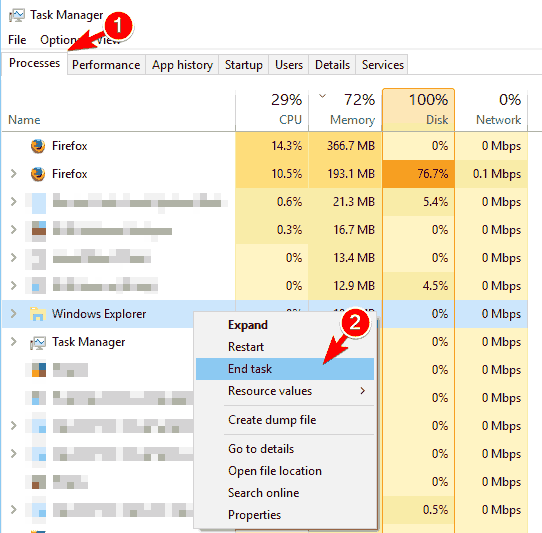
- Press Ctrl + Shift + Esc to open Task Director.
- When Task Managing director opens, navigate to Processes tab.
- Locate Windows Explorer on the listing, right click information technology and choose End Chore.
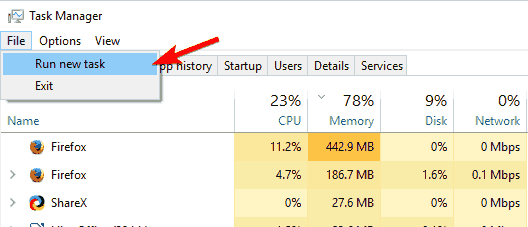
- Once Windows Explorer closes, select File > Run a new task.
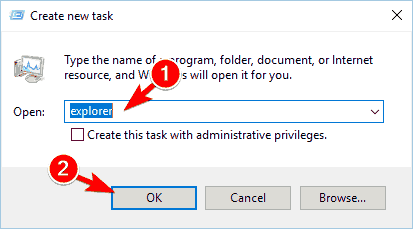
- The Create new task window will now announced. Enter explorer and click OK to showtime Windows Explorer again.
If you're getting theFile in use error, it's most likely that the file is being used by a different awarding. Sometimes, certain apps tin use files in the groundwork and cause this fault to announced.
To prepare the effect, be sure to close all running applications and try to delete the file. In addition, restart your PC and attempt to delete the file over again.
If that doesn't work, you might want to try moving all other files to a different folder. Afterwards doing that, endeavor to delete the binder that has the problematic file in information technology. Lastly, yous tin attempt restarting File Explorer.
Once Windows Explorer starts, try to delete the file once again. If that doesn't work, y'all tin try to stop the process that'south related to the problematic file. For instance, if you tin can't delete a PDF file, try terminating your PDF awarding from Job Manager.
1.3. Endeavor to delete the file from Condom Mode
- Click the Outset push button.
- Now click on Ability push button. Concord the Shift primal on your keyboard and choose theRestart option from the menu.
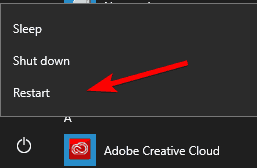
- Once your PC restarts, y'all'll come across a listing of options. Select Troubleshoot from the bill of fare.
- Select Advanced options > Startup Settings and click the Restart button.
- A listing of options will appear. Choose any version of Safe Mode by pressing the advisable primal.
If yous can't delete a file due to theFile in use error, you might want to attempt removing it from Condom Fashion. Once the Safe Mode starts, try to delete the file again.
1.4. Use Control Prompt
- Open Control Prompt every bit ambassador. To exercise that, press Windows Cardinal + Ten to open up Win + X menu and cull Command Prompt (Admin).
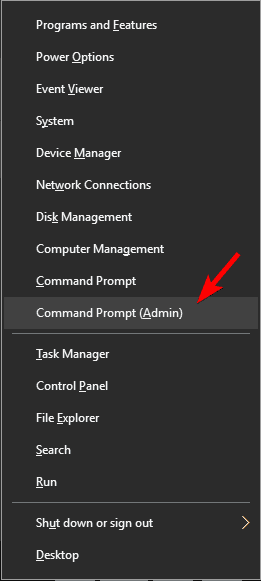
- Once the Control Prompt opens, discover the problematic file, concur the Shift key, and right-click it. At present choose Re-create every bit path from the menu.
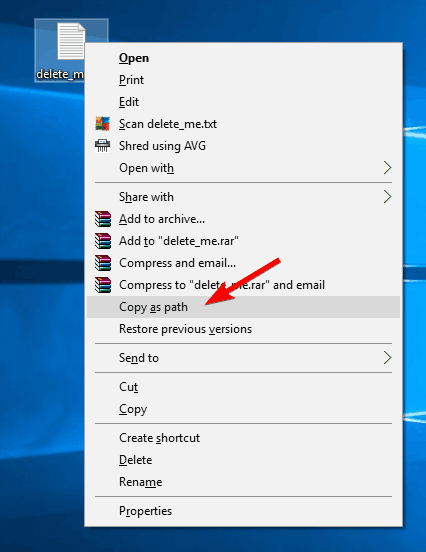
- In Control Prompt,enter del and press Ctrl + 5 to paste the file path. Don't run the command notwithstanding.
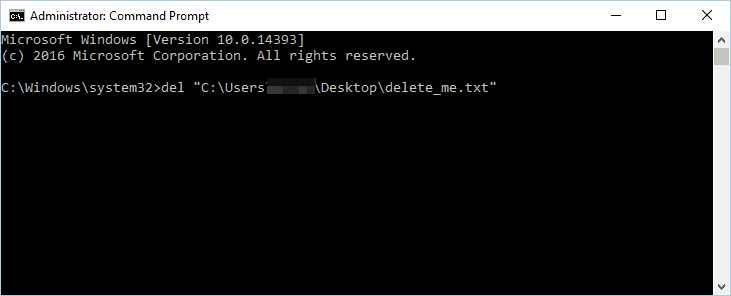
- Use Task Managing director to shut Windows Explorer. We explained how to do that in Solution i, so be sure to bank check it out. In order to successfully remove the file, it's important non to restart Windows Explorer.
- Switch back to Control Prompt and press Enter to run the control that you entered in Stride 2.
- Later the command is executed, you lot tin close Command Prompt and restart Windows Explorer
If you don't desire to rely on tertiary-party solutions to fix this problem, you can use Command Prompt instead.
i.5. Change the file extension of the problematic file
According to users, you lot might be able to gear up this problem simply by changing the file extension of the problematic file. In order to practise that, first you lot demand to turn on the option to testify file extensions. To do that, follow these steps:
- Open File Explorer.
- Click the View tab and cheque File proper noun extensions option.
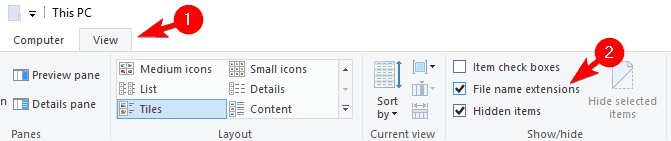
- After doing that, you need to find the problematic file, select it and press F2 on your keyboard.
- Change the file extension to .txt or any other extension.

- A alert message will appear. Click Yes.
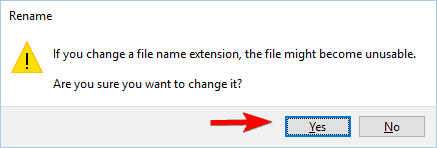
Later you change the file extension, try to delete the file again.
i.6. Switch to Details view
- Open File Explorer and locate the problematic file.
- Right-click the empty space and choose View > Details.
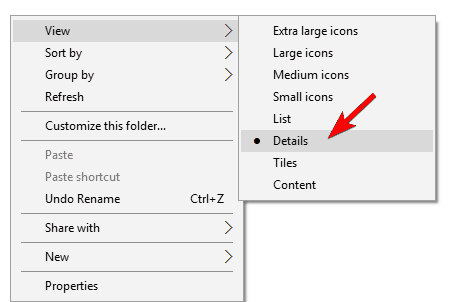
- Optional: Y'all can do the same thing by navigating to the View tab and clicking on Details.
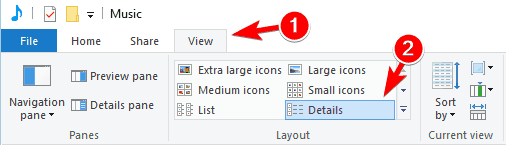
According to users, the File in use error can appear due to your thumbnails. Sometimes, Windows has problems unloading thumbnails, preventing you lot from deleting your files.
To gear up the problem, you only have to switch to Details view in File Explorer and you should be able to delete the file.
After switching to Details view, all thumbnails will be disabled and yous should be able to delete the file. Users suggest moving the file to Desktop and closing the File Explorer window.
By doing so, the preview pane won't be bachelor and you should be able to delete the problematic file with ease.
1.seven. Disable thumbnail generation
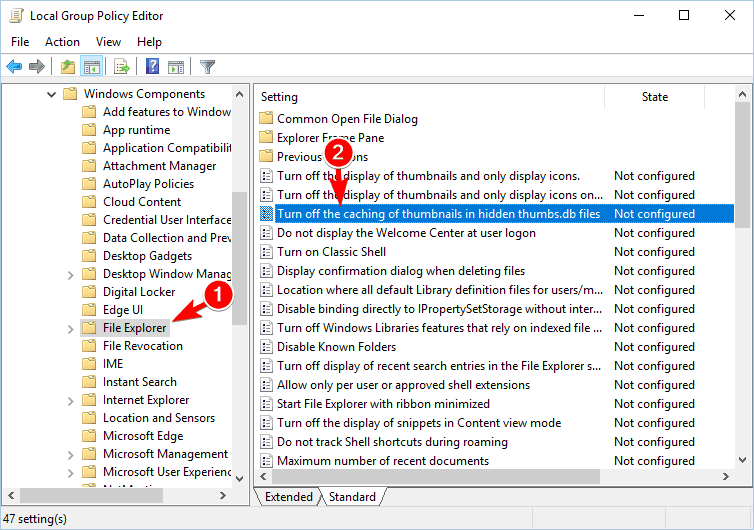
- Printing Windows Key + R and enter gpedit.msc. Click OK or press Enter.
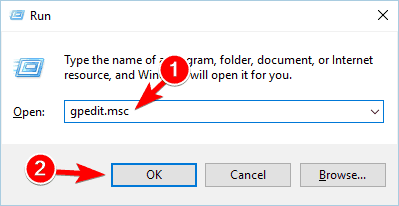
- When the Grouping Policy Editor opens, navigate to User Configuration > Administrative Templates > Windows Components > File Explorer in the left pane.
- In the right pane double click on Turn off caching of thumbnails in hidden thumbs.db files.
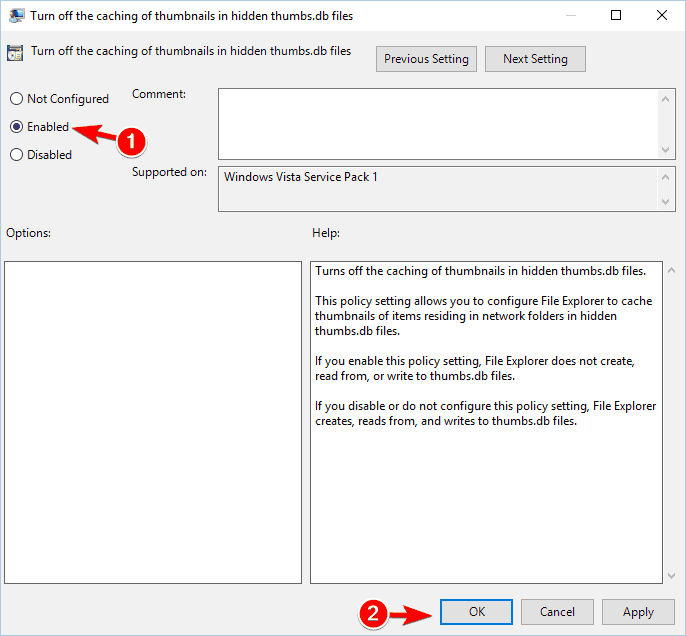
- Select theEnabled option and clickUtilize and OK to salve changes.
If you tin't access Group Policy Editor, you tin can disable thumbnail generation using Registry Editor. To do that, follow these steps:
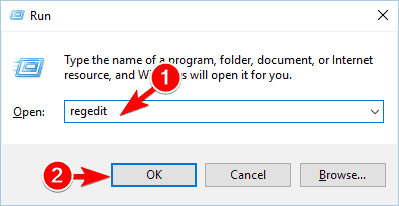
- Press Windows Key + R and enter regedit. Printing Enter or click OK.
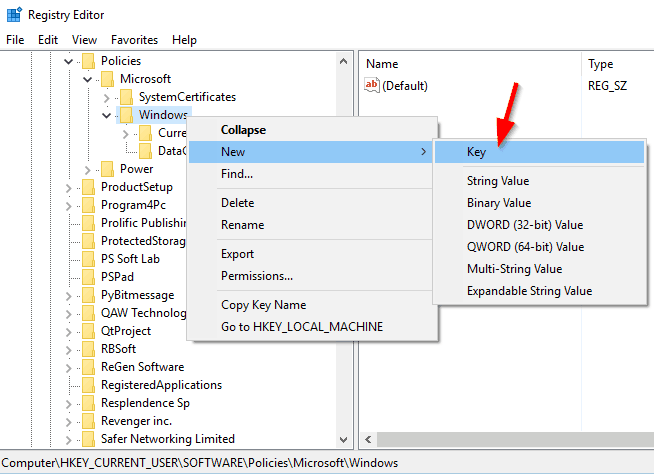
- When the Registry Editor opens, navigate to
HKEY_CURRENT_USERSOFTWAREPoliciesMicrosoftWindowskey in the left pane.
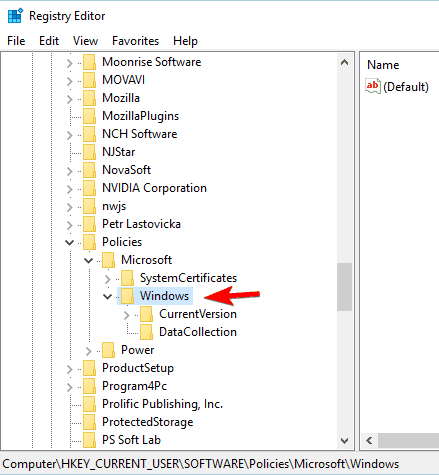
- Correct-click the Windows key and cull New > Key. Enter Explorer as the name of the new primal.
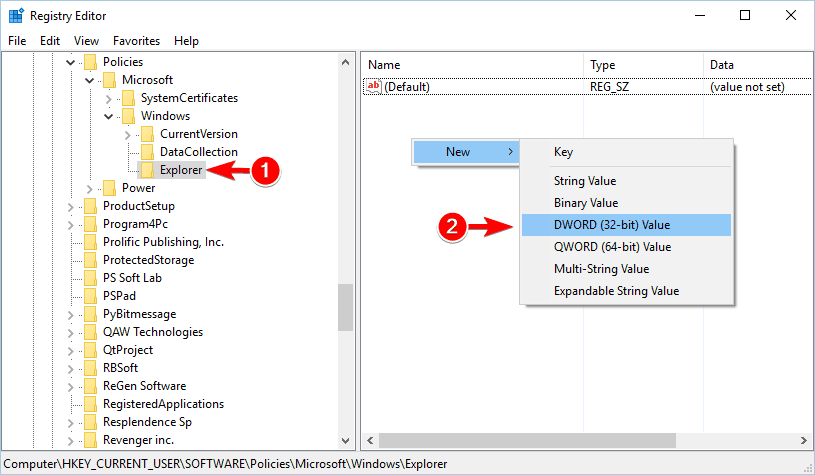
- Navigate to the Explorer key and right-click the empty space in the correct pane.
- Choose New > DWORD (32-bit) Value. Enter DisableThumbsDBOnNetworkFolders as the name of the new DWORD.
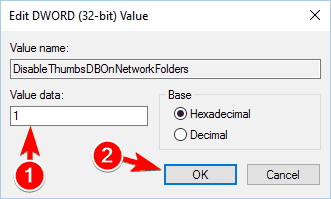
- Double-click newly created DisableThumbsDBOnNetworkFolders DWORD to open its properties.
- Set up Value data to 1 and click OK to relieve changes.
- Later on you're washed, close Registry Editor and check if the problem is resolved.
If y'all're having problems with this error, you might be able to fix it by disabling thumbnail generation. You can exercise that past using the Group Policy Editor. This solution applies to network drives, just it might work for your local bulldoze as well.
1.eight. Apply OpenFilesView tool
- Download OpenFilesView tool.
- Start the application. A list of agile files will now appear.
- Locate the problematic file on the list, correct-click information technology and choose Kill Processes of Selected Files. By doing so, you'll terminate processes that are associated with that file.
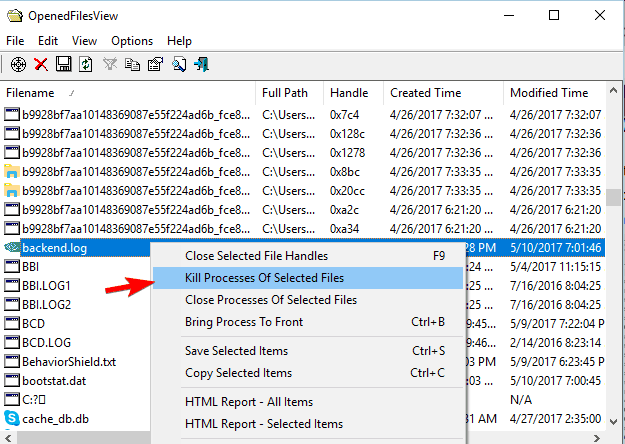
- After doing that, try to delete the file once more.
Another tertiary-party application that can help y'all with this problem is OpenFilesView tools. The application is simple to use.
This is a simple awarding that allows yous to close all processes related to a specific file. If the problematic file isn't available on the list, you might have to try a dissimilar solution.
1.ix. Apply Process Explorer
- Download Process Explorer.
- When the application opens, go to Find > Detect Handle or DLL.
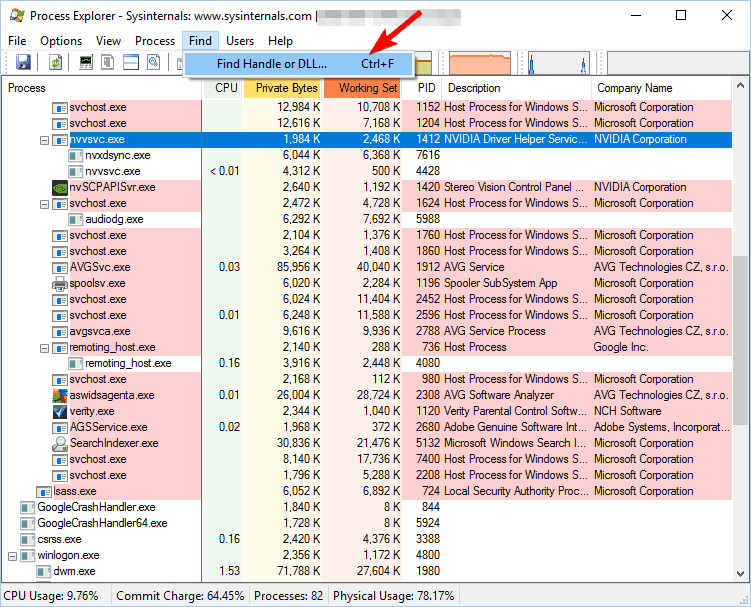
- In theHandle or DLL substring field, enter the proper name of the problematic file and click the Search button.

- A list of associated applications and DLLs should appear. Locate the application associated with the file, right-click information technology and choose theShut Handle option.
Several users reported that y'all might be able to fix the trouble past using Procedure Explorer.
Go on in listen that you might have to echo this process few times in club to close all related applications. We have to mention that Process Explorer is an advanced tool, so you might notice it hard to employ if you're a novice user.
1.10. Make sure that file isn't blocked
- Correct-click the problematic file and choose Properties from the carte.
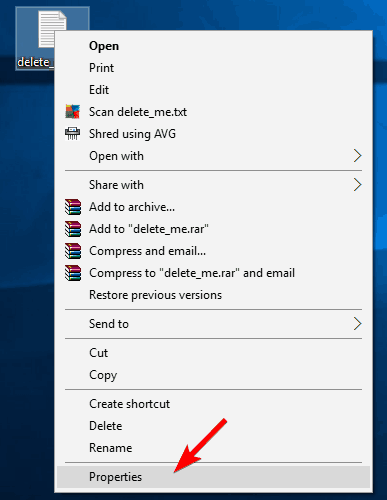
- Go to the General tab and click the Unblock button in Security section. Click OK and Apply to salve changes.
Sometimes, theFile in employ error can appear if the file you're trying to delete is blocked. Windows sometimes blocks downloaded files in order to protect yous from malware. Although this feature tin be useful, it tin also prevent you from removing sure files.
After unblocking the file, attempt to delete information technology once more. If you can't discover the Unblock push button in the Properties window, it means that the file is already unblocked, so y'all should effort a dissimilar solution.
1.11. Remove the virtual hard drive
- Printing Windows Key + X and choose Disk Management from the listing.
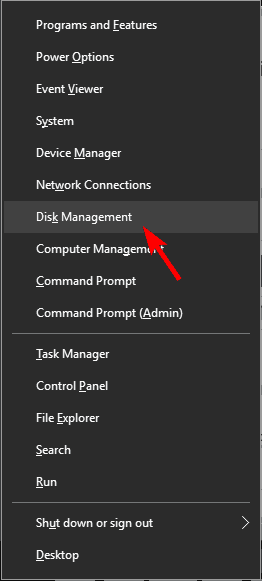
- The Deejay Direction tool will now appear. Locate your virtual hard drive, correct-click it and cull Detach VHD.
- A confirmation message volition at present appear. Click OK. After you lot disassemble the drive, it will disappear from Disk Management tool.
- Later doing that, close Disk Direction and try to delete the .vhdx file again.
A few users reported that theFile in use error appears while trying to remove a virtual hard drive .vhdx file. To set up this trouble, you need to remove the virtual hard drive from your PC.
Keep in mind that this solution only applies when deleting virtual hard bulldoze files. If you lot accept this problem with any other type of file, yous should try a dissimilar solution.
1.12. Use Resource Monitor
- Press Windows Fundamental + R and enter resmon. Press Enter or click OK.
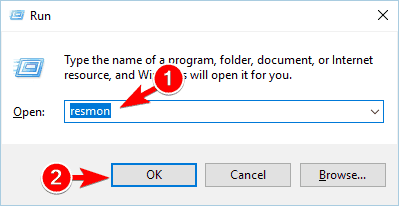
- When Resource Monitor starts, go to theCPU tab. Now, expand theAssociated Handles section and in theSearch Handles field, enter the name of the problematic file. A list of associated applications volition now appear.
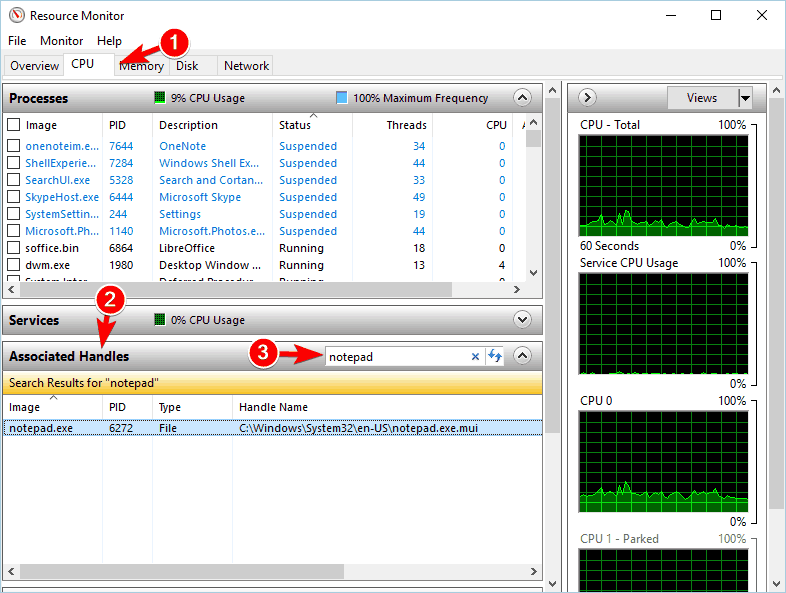
- Right-click the associated application and choose End Process from the carte.
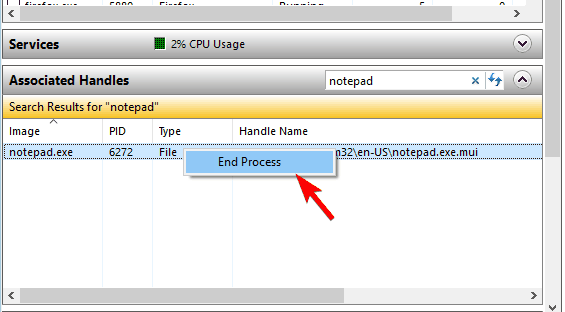
If you can't delete a specific file, you might be able to solve the problem by using Resources Monitor, a Windows application that can give you a lot of data almost open applications and files.
Keep in listen that sometimes you won't be able to discover the problematic file using Resources Monitor. If that happens, y'all might have to check each procedure i by one and cheque the list of all associated handles.
If you manage to find the binder that has the problematic file, you'll be able to determine which application is using it. Resource Monitor is an advanced tool, so information technology might take you a while to get used to it particularly if yous're a get-go time user.
2. How do I prepare the File in use error in Excel?
2.one. Create a registry file and add together information technology to your registry
- Open Notepad.
- Paste the following text:
Windows Registry Editor Version 5.00
[HKEY_CURRENT_USERSoftwareMicrosoftWindowsCurrentVersionExplorerAdvanced]
"ShowInfoTip"=dword:00000000[HKEY_CURRENT_USERSoftwareMicrosoftWindowsCurrentVersionExplorerModulesGlobalSettingsSizer]"PreviewPaneSizer"=hex:35,00,00,00,00,00,00,00,00,00,00,00,bd,02,00,00"ReadingPaneSizer"=hex:04,01,00,00,00,00,00,00,00,00,00,00,64,02,00,00
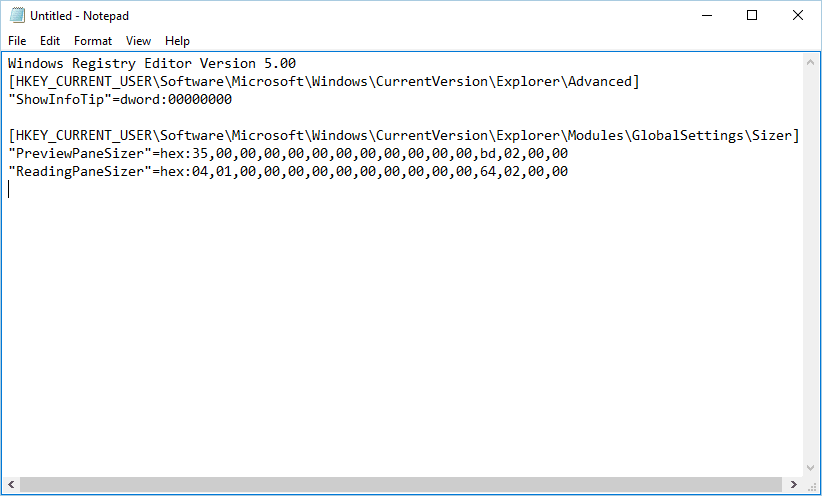
- Go to File and click Save as.
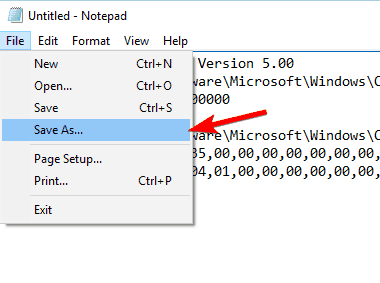
- Set Save as type to All Files. Enter set.reg as the File name and click the Save button.
- Shut Notepad and locate thefix.reg file. Double-click information technology and cull Yes when the warning bulletin appears.
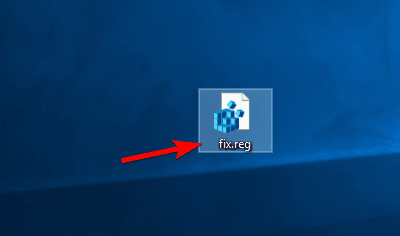
According to users, you might exist able to set theFile in use error while opening Excel files by creating a .reg file and adding it to your registry.
Continue in mind that this solution will alter your registry, therefore information technology's brash to create a backup or System Restore signal.
2.2. Disable the preview pane
Users claim you lot can fix this problem just past disabling the preview pane in File Explorer. We already explained how to do that in 1 of our previous solutions, so be sure to check it out.
ii.3. Cheque the file proper noun
The File in use fault can appear if the file name of your Excel document is too long. If the file name is too long, Excel can't create the lock file.
To gear up the issue, you lot need to locate your Excel file and shorten its name. Subsequently renaming the file, you should be able to access it without bug.
2.four. Delete the hidden lock file
- Navigate to the folder where problematic Excel file is saved.
- ClickView and check theHidden items selection.
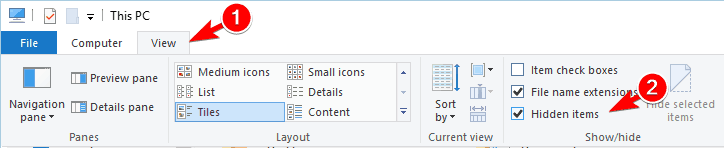
- Locate the lock file. (It should have the same name every bit your Excel document.)
- Delete the lock file.
Excel usually creates a temporary lock file alongside your Excel certificate. According to users, you but have to locate and remove the lock file in order to prepare this error.
After removing the lock file, you should be able to access your Excel certificate without any issues.
2.5. Cheque the personal.xlsb file
- Navigate to C:Users
your_username AppDataRoamingMicrosoftExcelXLSTARTfolder.- If this binder isn't available, navigate to
C:Usersyour_usernameAppDataLocalMicrosoftExcelXLSTARTfolder instead. - If you lot can't find any of these folders, you'll need to reveal hidden files. We already showed yous how to do that in our previous solution, and then exist sure to check information technology out.
- If this binder isn't available, navigate to
- Proceed in mind that personal.xlsb is a hidden file, so you'll need to reveal hidden files in order to see it.
- Once you locate personal.xlsb file, delete it if you don't program to use information technology.
- Optional: If you need the personal.xlsb file, right-click it and choose Properties from the menu.
- Navigate to General tab and check the Read-only option. Click Utilise and OK to save changes.
Co-ordinate to users, theFile in use error in Excel appears after adding macros to the personal.xlsb file. To ready the problem, you need to find and delete that file.
Subsequently doing that, you should exist able to start Excel without whatsoever bug.
The File in utilize error is an annoying trouble that will preclude you from accessing your files. If y'all accept this error on your PC, be sure to try some of our solutions and let us know how it works out for you!

Source: https://windowsreport.com/file-in-use-error-windows-10/
0 Response to "Excel Currently in Use Try Again Later"
Post a Comment